Concrete, Timber or Block: Choosing a Retaining Wall That Lasts on Melbourne’s Clay Soils
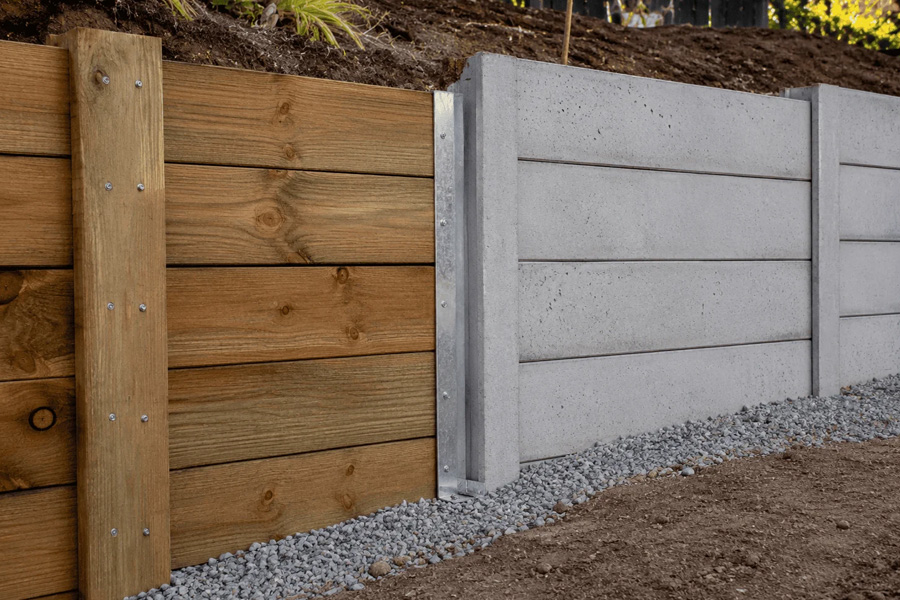
Image Source: mnjconcretinglandscaping.com.au
Retaining wall projects, since clay soils in Melbourne can make them more complicated than they look like at first. Clay can expand and become larger when wet and contract in dry weather. In these cases, stresses may be transferred to a wall and the soil below.
Using the right material is necessary, but will not yield a durable end result in itself. A big part of that is the drainage, type of soil, height of the wall, and appropriate construction. This is how block walls compare to concrete and timber.
How to Care for Clay Soil?
Clay retains water better than most sandy soils. Ground can become heavy and soft after rain. When there is a dry season, the moisture will fully evaporate with shrink and make spaces.
This can take a toll on retaining walls, particularly if water accumulates behind it, or their foundations are poorly readied. The design that is fit for the project must also be based on soil, slopes, drainage, and how much earth it needs to retain.
Only professional retaining wall builders in Melbourne with experience can evaluate these aspects before suggesting a construction method and material.
Concrete Retaining Wall: Strong and Made for Long-Term or Permanent Use
Concrete is a likelihood of it provides strength and durability in projects. It can be used in garden terraces, sloping blocks, driveways, and in places where a wall has to deal with heavy loads of soil.
Planed reinforced concrete for site reception. It also provides multiple finishes for homeowners to have an option of going with a simple look or a decorative surface.
But concrete walls, too, require a proper foundation and drain. If not properly managed, any water pressure behind that wall can result in very serious problems.
If you are a homeowner looking into concrete retaining walls in Melbourne, the design should correspond to trait elements, including wall height and site conditions. Whether reinforcement or engineering plans are necessary can be determined by a qualified professional.
Timber Burdening Partitions Types: They give a More Regular Look
Timber walls are appropriate for garden beds and smaller landscaping. They sometimes integrate nicely with plants and landscaping. Where a softer, natural look is wanted, they may also be considered as a pragmatic option.
Its biggest problem is long-term contact with humidity. Timber decays with time even though it is treated for outside use. Improperly designed and maintained walls cannot tolerate contact with wet soil, which can shorten their service lives.
Wood is probably not the best choice for every high-load use. Check its purpose, treatment rating, drainage condition and longevity every time before the selection.
Block Retaining Walls − Designs with Flexibility
Concrete mounds can give an aesthetic and well-organised look. Some are with interlocking blocks, and some are built with mortar and extra support. The type you are looking for depends on which wall is built and how high it goes.
Block walls can also be used to create perfect garden terraces and boundary features. But they still require firm footing and well-draining soil. Bad installation can cause gaps and bulges down the line.
Drainage Matters More Than Appearance
No matter what material it made up of, water needs to be managed properly. This could mean using a drainage aggregate, perforated pipes in the right manner, and discharge points that let excess water flow off safely depending on your design.
Even if the wall looks solid from far away, do not assume that it will perform!
Choose Wisely for Your Block
Each material has advantages of its own, these are concrete, timber and block. The ideal choice relies on your spending plan, layout purposes, and soil troubles, as well as the tonnage the wall is called for to carry.
Consult with experienced retaining wall builders in Melbourne before constructing and review practical layouts. So, with good planning and proper drainage and sound construction, you can rest assured that your retaining wall will withstand the test of time regardless of whether you opt for either timber or concrete retaining walls in Melbourne.