Best Fence Options for Central Texas Homes: Materials, Costs, and Key Considerations
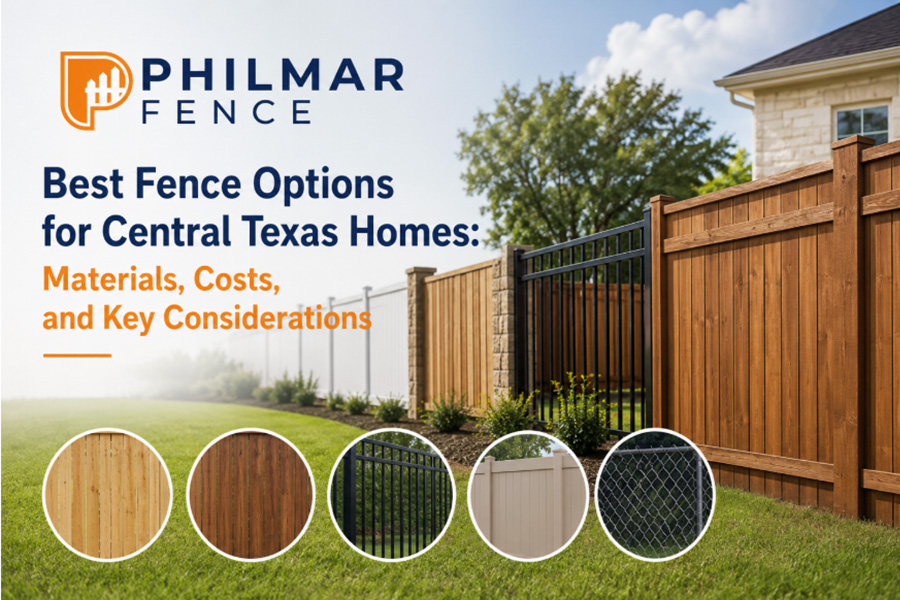
A fence is not only a barrier on your land territory. In addition to adding curb appeal, it can also provide privacy and security, as well as easily keep pets within your yard in Central Texas.
But picking a fence is not as simple as finding what looks best to you in this case. Hot summers, bright sun glaring on the wood, crashing storms, soils very rich in limestone, and dry or excessively wet conditions can all change the way your fencing acts.
What fence materials are best for homes in Central Texas? You can decide what is important for you, where your property is located, and how much it’s going to cost.
1. Wood Fencing: Classic and Versatile
Wood is a common fencing material for Texas homeowners.
Cedar is also perfect for outdoor use because it naturally resists insects and rotting. Also, wood provides plenty of design possibilities. It can be solid privacy (picket style), horizontal boards, or a fancier version.
Pros
- Natural, attractive appearance
- Strong privacy
- Many styles and heights
- Can be stained or painted
- Easy to customize
Cons
Wood needs regular maintenance. Then you are subjecting it to the elements of the hot Texas sun for long hours, which fade, dry, and crack everything. Moisture may also cause rot over time.
A quality stain or sealant will help lengthen a wood fence’s lifespan.
2. Minimum Care and Simple Cleaning − Vinyl Fencing
For you, the one searching for privacy fencing, vinyl is perfect.
You will not have to stain or paint it very often. It will not absorb water or rot, as you would find with untreated wood.
Types of vinyl fencing available are privacy, picket, and decorative. White is standard, but you can also get it in various colors or finishes.
In Central Texas, the heat and sunlight tend to linger. But not all vinyl products are equal, or even UV resistant, so color choice matters.
3. Metal Fencing: Strong and Stylish
Security and visual appearance are equally important in your fence-choosing process; hence, metal can be an ideal solution for you.
Wrought iron and ornamental steel fences are also available, which will give your property a formal look around the front yard and pools or even large properties. Aluminum, in contrast, is a lighter-weight metal and does not rust.
For privacy, it would be a good idea to say that most metal fencing styles are not the best choice because they have open parts. But it serves a very good purpose for outlining property without blocking view.
Applications That Metal Fencing Best Suits In
- Pool areas
- Front yards
- Sloped properties
- Security-focused applications
- Decorative boundaries
4. Chain-Link Fencing: Practical and Affordable
Another example is chain-link fencing, which makes sense when function dominates privacy.
Inexpensive, widely available, and an easy way to pen kids or pets in. Galvanized-coated versions can also provide extra protection against corrosion.
The downside is its appearance. Standard chain-link is not very private. If you want more buffer from nearby homes, privacy slats or landscaping can do the trick.
5. Masonry or Stone Fencing: Designed to Last
Central Texas limestone is notable. That is why masonry and stone fencing can be an attractive choice for homeowners who want a solid, long-lasting edge.
Stone walls provide excellent privacy, durability, and sound reduction. They also echo the architecture of many Central Texas homes.
But masonry is usually pricier than wood or chain-link. Proper foundation work also matters, especially where soil movement can affect a structure.
What to Consider Before Choosing a Fence?
Just because a fence is the cheapest doesn’t mean it’s a bad value. Consider how you intend the fence to perform over the next few years.
Consider Your Main Goal
Do you primarily need:
- Privacy from neighbors?
- A secure area for pets?
- Better curb appeal?
- Pool protection?
- A borderline for a bigger property?
That answer will quickly narrow your options.
Pay Attention to the Soil
Soil conditions in Central Texas can differ dramatically. Expansive clay soils, rocky ground, and limestone can all affect your fence installation.
Going with a post-hole depth, footer design and installation that is one-size-fits-all is not the route you want to take; plan specifically for your home.
Think about maintenance
A fence that seems low-cost to install may require more work down the road.
Varnish and wood may need staining and repairs. Vinyl needs less routine maintenance. Metal can sometimes need a little more TLC if its protective finish gets scratched. Regular inspections can help you catch loose posts, cracks, rust, or other small issues before they become costly repairs. Your local climate and the weather your fence faces can affect how often deferred maintenance turns into increased maintenance. Choosing a material you can live with in terms of maintenance can save you time and money down the line.
Look for the initial price and long-term maintenance.
Why Professional Installation Matters?
Even a poorly installed high-quality fence can fail.
Without posts set correctly, they may be out of plumb. Asymmetrically spaced fencing looks unfinished. When you have not secured the posts, it can cause gates to sag or even not get closed completely.
A qualified contractor could consider soil, grade, drainage, and necessary fencing. Philmar Fence installation teams have the experience needed to assist homeowners in selecting the right materials and method of installation for their property.
Inquire about any licensing and registration you need in your area, the contractor’s insurance coverage and warranties, and even about local projects the company completed in the past. It is also a good idea to check whether your neighborhood has HOA restrictions that limit fence height, materials, color, or location.
Final Thoughts
There is no ultimate perfect Central Texas fence.
Choose wood or vinyl for lower maintenance. Metal gives strength and beauty, while chain-link provides a practical barrier. Masonry works best when you need something sturdy with some heft, but masonry may not be the first choice all of the time, and that is where stone steals a march.
The best choice comes down to your property, budget, and how you expect the fence to perform.
Select the material wisely, prepare for Central Texas elements and soil conditions, and pay for proper installation. An ideal fence should not only look good on the first day, but also keep doing its job for years.